Styles · A
Mid Century Interior Design
1950s–60s icon: tapered legs, warm teak, optimistic geometry.
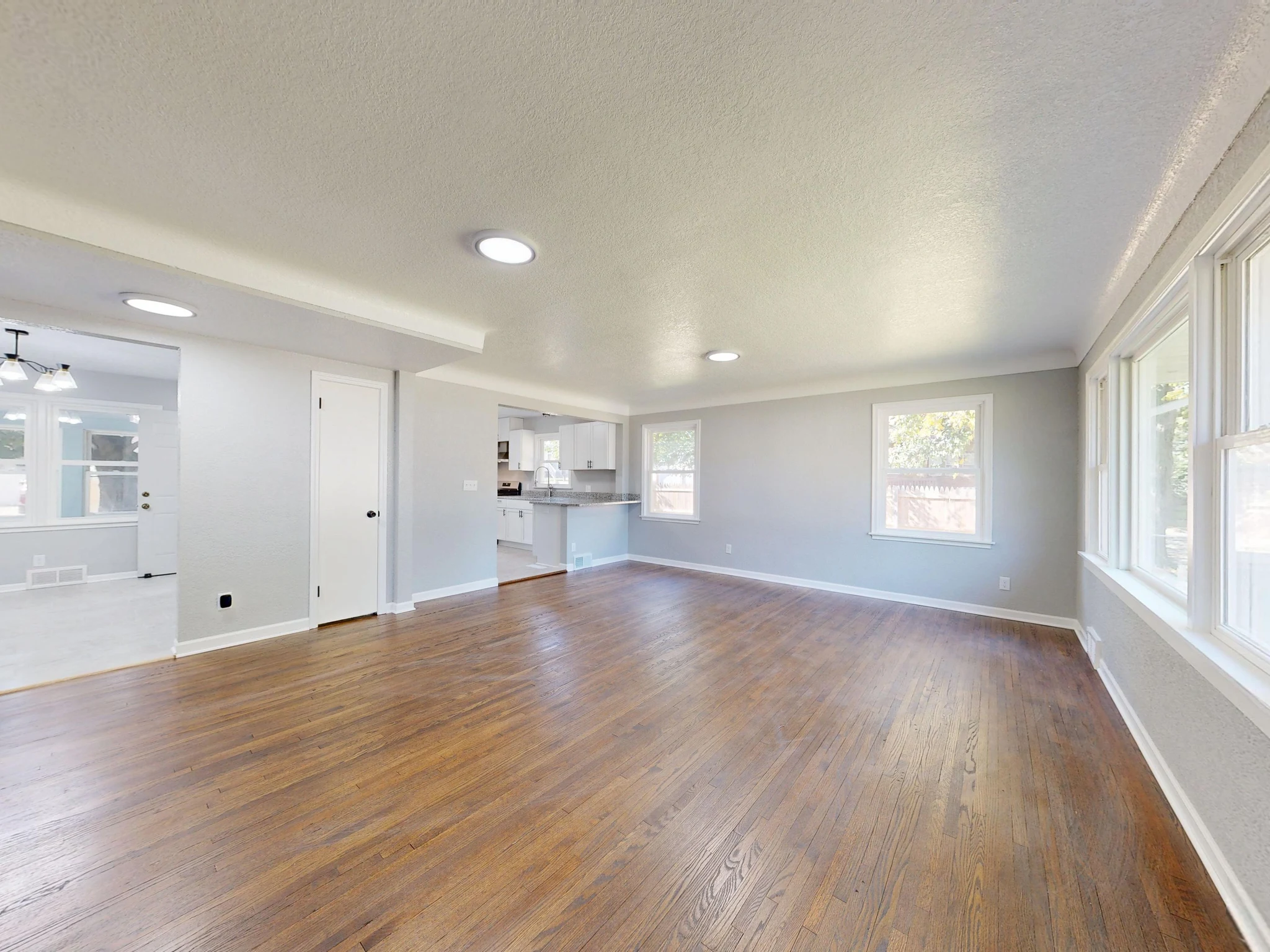
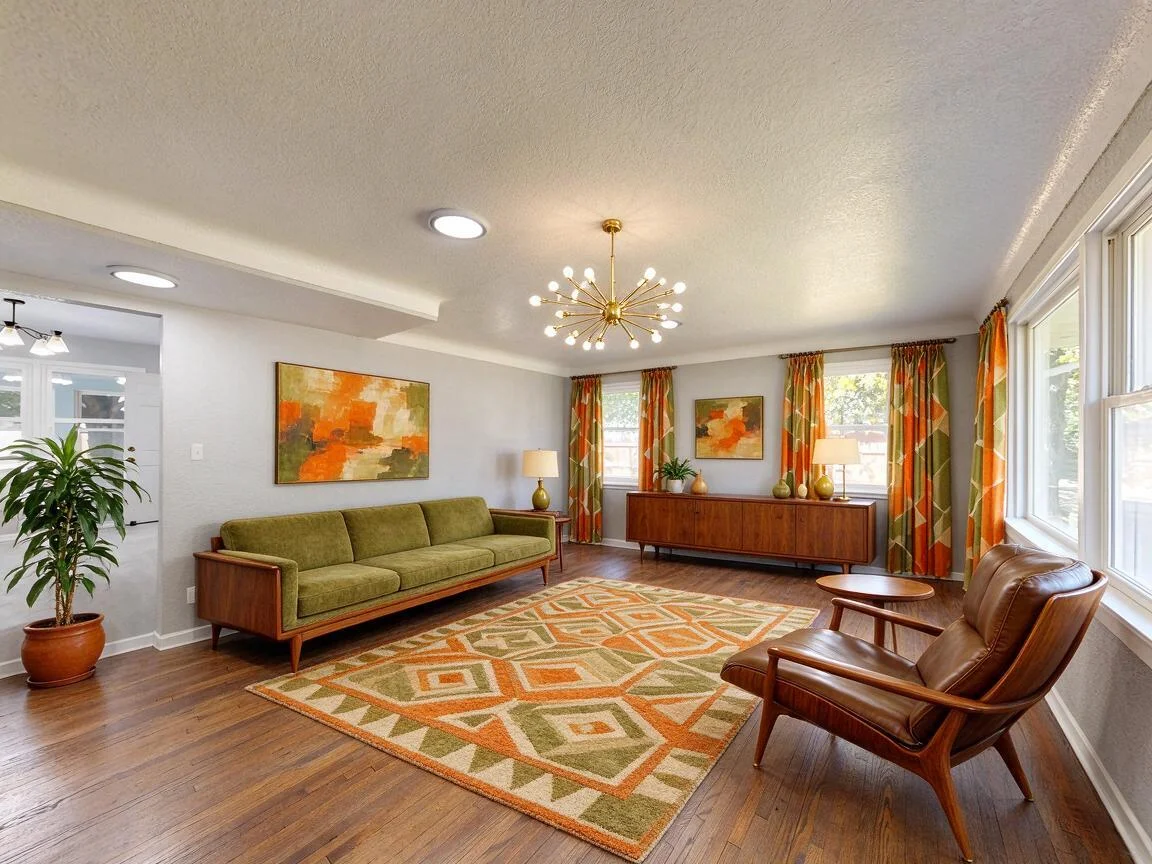
Mid-century modern is the design language of the 1950s and 60s: clean organic curves, tapered legs, warm teak and walnut, and a belief that beautiful things should be affordable and useful. A mid-century living room feels optimistic — precise but never stiff, retro but never costume.
Materials and texture
Wood leads: teak, walnut and rosewood with a satin finish that shows grain. Upholstery pairs smooth wool and leather with occasional tweed; surfaces stay flat and honest, decorated by geometry rather than carving.
Color and light
The classic palette grounds warm wood in mustard, burnt orange, olive and teal, against white or pale grey walls. Lighting is sculptural — sputnik chandeliers, mushroom lamps and arc floor lamps — acting as the room's jewelry.
Furniture and layout
Icons do the talking: a low sofa with slim tapered legs, an egg or wing lounge chair, a credenza that floats on its frame. Layouts stay conversational and open, arranged around a coffee table sized for the room and the way you use it.
How to get the look
- Pick one true wood tone (teak or walnut) and repeat it at least three times
- Choose sofas and chairs with visible tapered legs to keep the floor visible
- Anchor with a geometric or Persian rug in mustard or rust
- Add one sculptural lamp as the room's signature
- Hang abstract or atomic-age art at mid-height, nothing fussy
Mid-century vs contemporary
Contemporary design is whatever is current — today that means soft minimalism, curves and greiges. Mid-century is a fixed historical vocabulary: teak, tapered legs, saturated accents. They mix beautifully, but a room that is all mid-century reads retro; all contemporary reads now.
Palette
See this style on your own photo
Upload one ordinary phone photo and see your room restyled in about seventeen seconds.
Common questions
What is mid-century modern style?
A 1950s–60s design movement: organic clean lines, tapered legs, teak and walnut woods, geometric patterns and saturated accents like mustard, orange and teal.
What colors work with mid-century interiors?
Warm neutrals as the base — cream, beige, grey — with mustard yellow, burnt orange, olive green and teal as the signature accents.
Can AI restyle my room as mid-century?
Yes. Upload a living-room photo and you will see an AI-generated mid-century concept. Results typically keep your walls, windows and layout recognizable; use the image as inspiration, not a guarantee of exact furniture fit.